The future of senior care will be shaped by many forces.
Aging in place will continue to influence how families plan. Dementia care will demand greater awareness and support. Home care will become increasingly important as more people want to remain in familiar surroundings. Technology and artificial intelligence will continue entering the conversation. Healthcare systems will need better transitions. Employers will have to recognize how caregiving affects the workforce. Policymakers will face pressure to address the realities of aging populations and family caregiving.
All of those developments matter.
But the future of senior care will not be built by innovation, policy, media, or services alone.
It will be built around trust.
Trust will determine which resources families use.
Trust will determine which professionals families listen to.
Trust will determine whether older adults accept support.
Trust will determine whether technology is adopted or abandoned.
Trust will determine whether organizations are seen as partners or simply providers.
Trust will determine whether the public conversation about senior care becomes more helpful or more confusing.
As senior care changes, trust will become one of its most important forms of infrastructure.
Families Will Need More Than Options
Families already have access to more information than previous generations ever did.
They can search online, watch videos, listen to podcasts, read articles, follow experts, join groups, compare services, review products, and hear from other caregivers almost instantly.
More options can be valuable.
But more options can also become overwhelming.
A family facing a new diagnosis, a fall, a hospitalization, a safety concern, or a care transition is not simply looking for more choices. They are trying to understand which choices are appropriate, credible, practical, and trustworthy.
The future of senior care will not be won by those who create the most information.
It will be shaped by those who help families make sense of information.
That distinction matters.
Families need guidance that respects their circumstances. They need communication that explains benefits and limitations. They need trusted voices who can help connect clinical realities, personal values, home life, finances, and family responsibilities.
They do not need more noise.
They need confidence that the information they are receiving is grounded in responsibility.
Aging in Place Will Depend on Trust
Aging in place is often discussed as a goal.
Many older adults want to remain at home or in familiar communities for as long as possible. Families often want to support that wish. Home care, safety tools, transportation, meal support, medication management, companionship, technology, and family coordination can all play a role.
But aging in place is not achieved by desire alone.
It depends on trust.
Older adults must trust that accepting support does not mean losing dignity. Families must trust the people and services entering the home. Professionals must trust that they are receiving accurate information about what is happening day to day. Care plans must be trusted enough to be followed. Technology must be trusted enough to be used.
Without trust, even a good plan can break down.
A family may resist outside help. An older adult may hide concerns. A caregiver may become overwhelmed because they do not trust anyone else to step in. A provider may miss important details because communication is incomplete.
The future of aging in place will require more than products and services.
It will require relationships built on trust, communication, and respect.
Technology Must Earn Its Place in Daily Care
Technology will continue to shape senior care.
Some tools will help families communicate. Some will support medication reminders, safety monitoring, cognitive engagement, transportation, care coordination, documentation, education, social connection, or caregiver support. Artificial intelligence may help organize information, identify patterns, personalize resources, or reduce administrative burden.
These possibilities are important.
But senior-care technology cannot assume trust simply because it is innovative.
Families will ask practical questions.
Does this actually solve a problem we have?
Can my loved one use it?
Will it create another task for the caregiver?
Who has access to the information?
What happens if something goes wrong?
Is this making care more human, or is it replacing the human understanding that care requires?
Technology succeeds in senior care when it begins with the real needs of older adults, family caregivers, and care professionals.
It fails when it expects families to reorganize their lives around a product.
The future will belong to innovation that earns trust by being useful, accessible, transparent, and grounded in the realities of care.
Dementia Care Will Require Trusted Guidance
Dementia care will remain one of the most emotionally complex areas of senior care.
Families may face changes in memory, communication, behavior, safety, independence, relationships, and identity. They may struggle with grief while the person they love is still present. They may have to make decisions about driving, living arrangements, finances, supervision, medical care, and long-term planning.
In these moments, trust matters deeply.
Families need guidance that is compassionate and practical. They need resources that do not shame them. They need professionals and advocates who understand that dementia affects the entire family system. They need stories that help them feel less alone, but they also need credible information that helps them prepare.
Dementia care cannot be reduced to awareness alone.
Awareness must lead to understanding, support, planning, dignity, and action.
The future of dementia care will require stronger connections among medical professionals, researchers, home care providers, authors, advocates, community organizations, media platforms, and families.
Trust will determine whether those connections are meaningful.
Organizations Will Need to Communicate With More Humanity
Senior-care organizations will face increasing pressure to explain who they are, what they do, and why families should trust them.
This applies to home care companies, healthcare systems, senior living communities, technology companies, nonprofits, advocacy organizations, publishers, educators, and service providers.
The organizations that communicate only in institutional language will struggle to connect.
Families want to know what a service means in real life.
They want to understand how support will affect their loved one’s daily routine, safety, independence, dignity, and quality of life. They want to know whether the organization understands caregiving beyond marketing language.
Human communication will become a competitive advantage because trust is built through clarity and sincerity.
Organizations will need to explain limitations as well as benefits. They will need to listen to family caregivers and older adults earlier in the process. They will need to communicate with empathy without becoming vague or sentimental.
Trust grows when organizations speak honestly and act consistently.
The future will reward those who understand that senior care is not simply a market.
It is a human responsibility.
Media Will Shape What Families Believe
Media will continue to influence the future of senior care.
The stories families encounter can shape how they understand aging, caregiving, dementia, home care, technology, and long-term care. Media can elevate credible experts, introduce practical resources, challenge ageism, spotlight family caregivers, and bring attention to issues that deserve urgency.
But media also has the power to distort.
It can oversimplify complex realities. It can prioritize emotional impact over practical context. It can give visibility to ideas that sound appealing but lack depth. It can make families feel that everyone else is managing caregiving better than they are.
This is why trusted senior-care media matters.
The purpose should not be attention alone.
The purpose should be understanding.
A strong media platform in senior care should help audiences connect the dots. It should bring together lived experience, professional insight, research, advocacy, innovation, and practical guidance.
It should make people feel more informed, more prepared, and less alone.
That is the kind of media the future of senior care will need.
Trust Must Include Older Adults Themselves
Any future vision of senior care must keep older adults at the center.
Too often, conversations about care happen around older adults instead of with them. Their needs are discussed. Their safety is discussed. Their risks are discussed. Their diagnoses are discussed.
But their preferences, fears, values, goals, and dignity must remain central.
Trust is weakened when older adults feel decisions are being made without them.
It is strengthened when they are treated as whole people.
Aging does not erase identity. A diagnosis does not erase personhood. Needing assistance does not erase autonomy.
The future of senior care must protect the humanity of the person receiving care.
That means asking what matters to them. It means communicating clearly. It means recognizing that independence may look different over time, but dignity should not disappear.
Families, professionals, organizations, and innovators all have a responsibility to remember that senior care is not only about managing need.
It is about honoring a person’s life.
The Role of Trusted Influence in the Future of Care
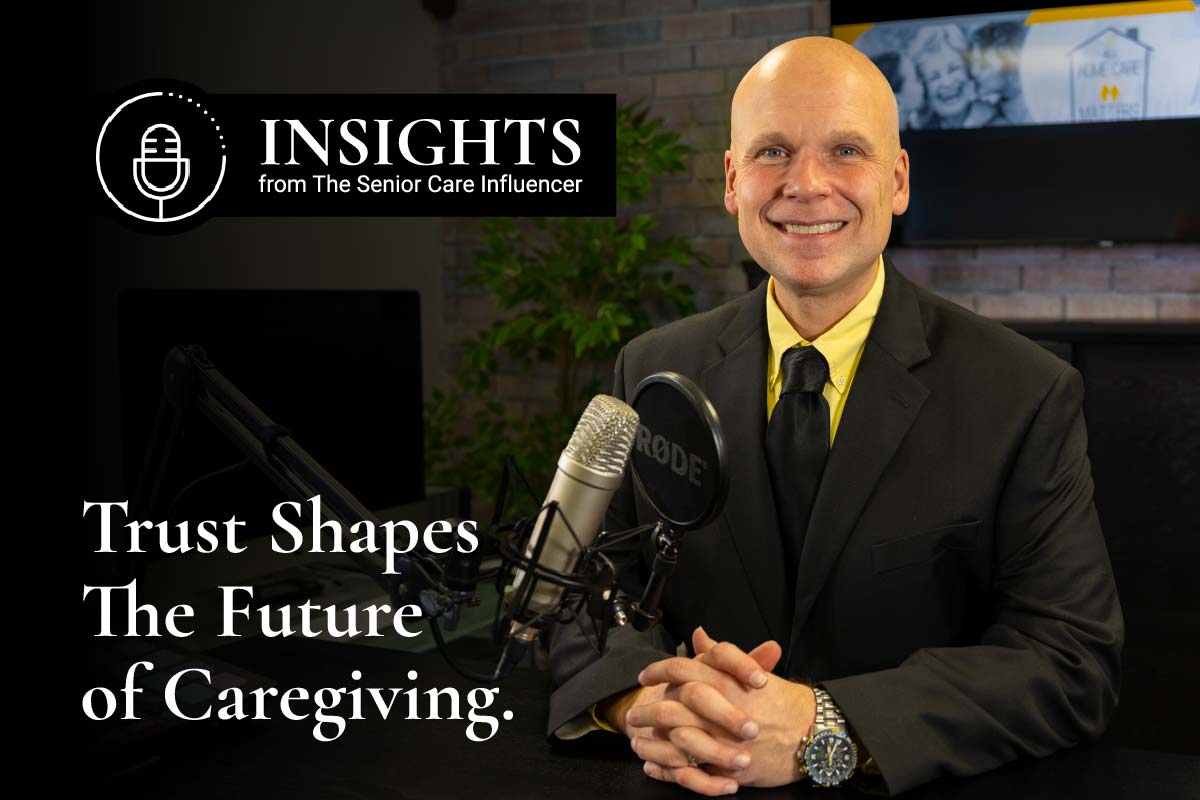
As Lance A. Slatton, The Senior Care Influencer, I believe one of the most important roles of trusted influence is helping people understand how the pieces of senior care connect.
Families need to hear from professionals.
Professionals need to understand families.
Innovators need to listen to users.
Organizations need to communicate more clearly.
Authors and advocates need platforms that help their work reach the people who need it.
Policymakers need to understand what decisions look like inside the home.
Older adults need to remain central in the conversation.
No single person or platform can solve the future of senior care.
But trusted voices can help make the conversation more connected, more responsible, and more useful.
That is where influence should be directed.
Not toward attention for its own sake.
Toward clarity.
Toward connection.
Toward trust.
The Future Will Be Human
The future of senior care will include new tools, new models, new partnerships, new policies, and new platforms.
But the heart of senior care will remain human.
It will still involve families trying to make difficult decisions. It will still involve older adults wanting to be treated with dignity. It will still involve caregivers carrying responsibilities that are often unseen. It will still involve professionals trying to help within systems that can be difficult to navigate.
Technology may support care.
Policy may shape access.
Organizations may deliver services.
Media may elevate the conversation.
But trust will determine whether any of it works.
The future of senior care will be built around trust because trust is what allows people to accept help, share concerns, use resources, follow guidance, and believe that the people speaking to them understand what is truly at stake.
Senior care cannot move forward on innovation alone.
It must move forward with credibility, compassion, transparency, accountability, and respect.
That is the future families deserve.
That is the standard senior care should be working toward.