Senior care touches almost every family, but too often it remains outside the larger public conversation until a crisis occurs.
A parent falls. A diagnosis is received. A hospital discharge happens faster than expected. A family begins searching for home care, dementia support, financial guidance, legal direction, transportation, safety solutions, or help understanding what comes next.
Only then do many people realize how complicated senior care truly is.
They discover that aging, caregiving, healthcare, long-term care, dementia care, home care, insurance, technology, family dynamics, and public policy are not separate conversations. They are deeply connected. One decision often affects another. One missing piece of information can change the direction of a family’s care journey.
Yet the public conversation about senior care remains too fragmented. It is often reactive instead of proactive. It is often technical when families need clarity. It is often promotional when families need guidance. It is often discussed inside professional circles long before it reaches the people who are living it.
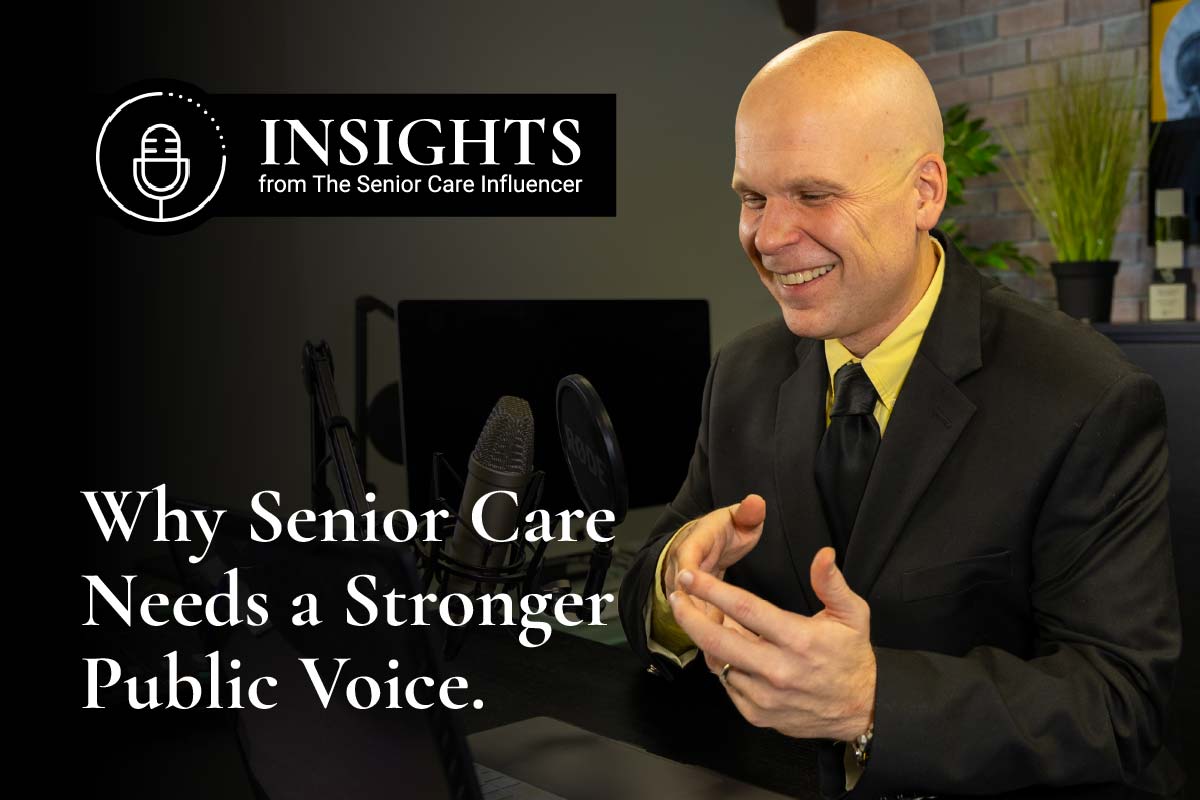
That is why senior care needs a stronger public voice.
Not a louder voice for the sake of attention.
A clearer voice.
A trusted voice.
A voice that can help families understand what is happening, help professionals communicate what matters, and help society recognize that caregiving is not a private challenge affecting only a few people. It is one of the defining issues of our time.
Senior Care Is Too Important to Remain Invisible
Many families do not begin learning about senior care until they are already overwhelmed.
They may not know the difference between home care and home health. They may not understand what Medicare does and does not cover. They may not know when a memory concern requires further evaluation. They may not know how to begin conversations about safety, driving, medications, finances, or long-term planning.
This lack of understanding is not a failure of families.
It is a failure of communication.
For too long, many of the most important senior-care conversations have taken place after a crisis has already forced action. Families are expected to absorb unfamiliar terminology, compare services, evaluate risks, coordinate relatives, advocate inside healthcare systems, and make emotional decisions under pressure.
That is not a fair way to prepare people.
Senior care should not become visible only after someone is in distress.
The public conversation must become stronger before families reach the breaking point. It must make aging, caregiving, planning, support, dignity, and care options part of a more honest national dialogue.
A stronger public voice helps move senior care out of the shadows and into everyday awareness.
A Stronger Voice Does Not Mean Simplifying the Issues
Senior care is complex because people are complex.
Every older adult has a history, preferences, values, fears, relationships, health needs, finances, and goals. Every family has its own dynamics, resources, conflicts, strengths, and limitations. Every care decision exists within a larger reality that may include employment, geography, culture, money, health systems, insurance, and emotional strain.
A stronger public voice should not pretend that these issues are simple.
The goal is not to reduce senior care to easy slogans.
The goal is to make complex issues understandable without stripping away their seriousness.
Families deserve communication that respects their intelligence while recognizing their stress. They deserve explanations that are practical, compassionate, and honest. They deserve information that helps them ask better questions instead of making them feel as though they should already know the answers.
In senior care, clarity is not the same as oversimplification.
Clarity means helping people understand what matters, what questions to ask, what options may exist, and where professional guidance may be needed.
That kind of communication can change the way families experience care.
The Public Conversation Must Include More Than One Perspective
No single profession, organization, company, platform, or individual owns the senior-care conversation.
Physicians understand medical conditions. Nurses understand clinical realities. Social workers understand systems, family dynamics, and support networks. Home care professionals understand what daily assistance looks like inside the home. Elder-law attorneys understand legal and financial planning. Researchers understand emerging evidence. Innovators understand new tools and technology. Authors and advocates help translate experience into meaning.
Family caregivers understand the daily reality in ways that no chart, policy, or product roadmap can fully capture.
Older adults understand what dignity, independence, identity, and choice mean in their own lives.
A stronger public voice in senior care must bring these perspectives together.
It should not elevate one group by dismissing another. It should not treat lived experience as less valuable than professional expertise. It should not treat innovation as meaningful simply because it is new. It should not treat visibility as proof of credibility.
The strongest senior-care conversation is one where expertise, experience, compassion, and accountability meet.
That is the conversation families need.
Media Can Help Senior Care Reach the Families Who Need It
Media has an important responsibility in this work.
A thoughtful interview, article, video, podcast episode, keynote, or public conversation can introduce families to resources they may never have found. It can make complicated subjects more accessible. It can help professionals explain their work in human terms. It can bring attention to overlooked issues. It can elevate advocates, authors, researchers, organizations, and innovators whose work deserves a larger audience.
But media can also add to the noise.
A story can become too promotional. A product can be highlighted without enough discussion of who it helps and where its limits are. A difficult caregiving experience can be used for emotional impact without offering meaningful context. A headline can attract attention while leaving families no better informed.
Senior-care media should do more than amplify.
It should connect.
It should connect families with credible information. It should connect professionals with the people they serve. It should connect innovation with real-world caregiving needs. It should connect public attention with practical understanding.
That is why trusted platforms matter.
When a platform has reach, it also has responsibility.
The Voice Senior Care Needs Must Be Responsible
A stronger public voice in senior care must be careful with the trust it receives.
Families are often making decisions during some of the most vulnerable moments of their lives. They may be afraid. They may be exhausted. They may be grieving a change in the person they love. They may be trying to honor someone’s independence while also protecting their safety.
That vulnerability should never be exploited.
Responsible influence means being transparent. It means acknowledging limitations. It means refusing to make promises that cannot be kept. It means asking whether a message truly helps the people it is trying to reach.
It also means being willing to ask difficult questions.
Does this service understand the realities families are facing?
Does this product solve a meaningful problem?
Does this recommendation need more context?
Does this expert opinion apply broadly, or only in certain circumstances?
Are families being educated, or are they being persuaded?
These questions matter because communication in senior care can influence real decisions.
A stronger public voice should help families feel more prepared, not more pressured.
Why This Work Matters to Me
My work in senior care began personally before it became professional.
Caregiving changed my family. It changed the direction of my life. It led me into more than 20 years of work in healthcare and senior care. It shaped the creation of All Home Care Matters, my work with AlzAuthors, my writing, my speaking, and the conversations I continue to have with caregivers, professionals, advocates, authors, researchers, innovators, and policymakers.
As Lance A. Slatton, The Senior Care Influencer, I believe the public voice of senior care must be rooted in service.
It should make families feel seen.
It should make older adults feel respected.
It should make professionals and organizations communicate more clearly.
It should help innovators understand the people they are trying to serve.
It should bring important issues into public view before families are already in crisis.
This is not about making senior care louder for the sake of visibility.
It is about making senior care clearer, more trusted, more human, and more connected.
Senior Care Needs a Voice That Helps People Understand
The future of senior care will require better systems, better services, better policies, better technology, and better support for family caregivers.
But none of those improvements will matter as much as they should if families cannot understand what is available, whom to trust, and how the pieces fit together.
Senior care needs a stronger public voice because families should not have to face these decisions alone.
They need guidance before the crisis.
They need clarity inside the crisis.
They need dignity after the crisis changes their lives.
And they need public conversations that recognize caregiving not as a side issue, but as a central part of how we care for one another as a society.
A stronger public voice in senior care is not about attention.
It is about responsibility.
It is about trust.
It is about helping people understand one of the most important human experiences they may ever face.